
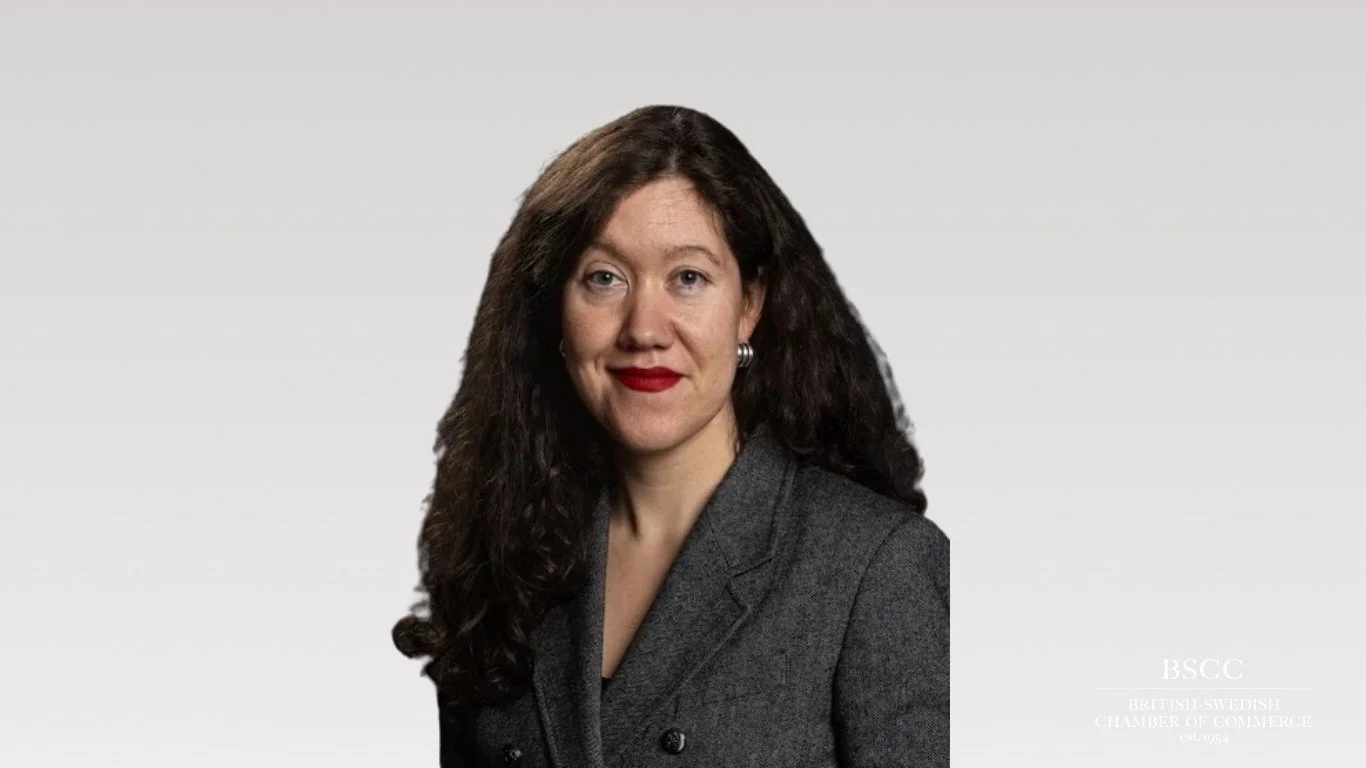
Lea Berriault is the founder and CEO of Mackinder. With over a decade of experience in geopolitical analysis, media entrepreneurship and strategic communications, she helps leaders in industry, government, and international organisations navigate geopolitical risk and global uncertainty.
Mackinder Advisory is a Stockholm-based consultancy bringing together geopolitical analysis, strategic communications and project management. Mackinder craft bespoke solutions that empower clients to make confident decisions and anticipate challenges in a rapidly evolving world. Their philosophy is that every challenge is unique, and so is the solution. Bringing agility, clarity, and precision to every engagement – they offer everything from geopolitical briefings tailored to your organisation, to research and writing to help shape global narratives, and keynotes, panels, and workshops for conferences and corporate events.
What trends do you see within your line of business?
The pace of change is pulling attention in two directions: immediate threats and era-defining shifts such as the rise of artificial intelligence. However, the medium term is frequently overlooked. This is where companies and institutions often have the greatest scope to act, both to reduce exposure and to seize opportunities.
For a business, that middle ground might involve an emerging regulatory divergence, a gradual change in energy competitiveness or a trade relationship becoming less dependable. These developments rarely command the same attention as a crisis, but recognizing them early gives companies more options and time to respond.
Another visible trend is the growth of geopolitical software services. As software becomes easier to produce, we need to establish which approaches actually deliver better forecasts. This requires systematically tracking, cataloguing and categorizing different methods, then comparing their results over time. For now, it is still too recent for that evidence to have accumulated, but in the near future we will be able to establish credible blueprints for the highest possible forecasting accuracy.
From your perspective, what are the greatest challenges right now?
Companies understandably learn from costly disruptions. But those experiences can leave them preparing for the previous crisis. They keep monitoring the same threat and implementing the response they wish they had adopted earlier. The difficulty is learning from the past without allowing it to define every future scenario.
Meanwhile, geopolitics has become inseparable from economics, trade, technology and law. Understanding a political event is only the starting point; businesses need to know how it affects their suppliers, investments and market access. No single analyst can cover all these connections. A broad network of specialists, and the ability to draw their insights together, are essential.
This also makes communication a central part of the work. A sophisticated assessment has limited value if a management team cannot see what it means for a decision. Consultants need to make uncertainty intelligible without implying that it can be eliminated. That means distinguishing what we know, what we assume and which developments would warrant a different course of action.
And, opportunities?
Supply chain restructuring, shifting trading relationships and efforts to reduce dependencies are usually discussed in terms of disruption and cost. But they also create openings for new suppliers, partnerships and business models.
When existing arrangements become less viable, companies have a reason to revisit inefficiencies they previously tolerated. The task is to identify where change creates a commercial opening, and whether the conditions for pursuing it are likely to endure.
This is especially relevant for smaller companies, which may lack dedicated geopolitical expertise but still face international exposure. They do not necessarily need an extensive forecasting operation. They need a proportionate understanding of their dependencies, a few plausible scenarios and clear indicators to monitor. Making this kind of advice accessible is an opportunity for the consulting industry itself, too.
For geopolitical consulting, this means placing greater emphasis on connecting an understanding of political forces with practical choices. The strongest advice helps businesses recognize what they can shape, as well as what they must adapt to. The aim is to give decision makers enough clarity to act before their choices become constrained by events.