
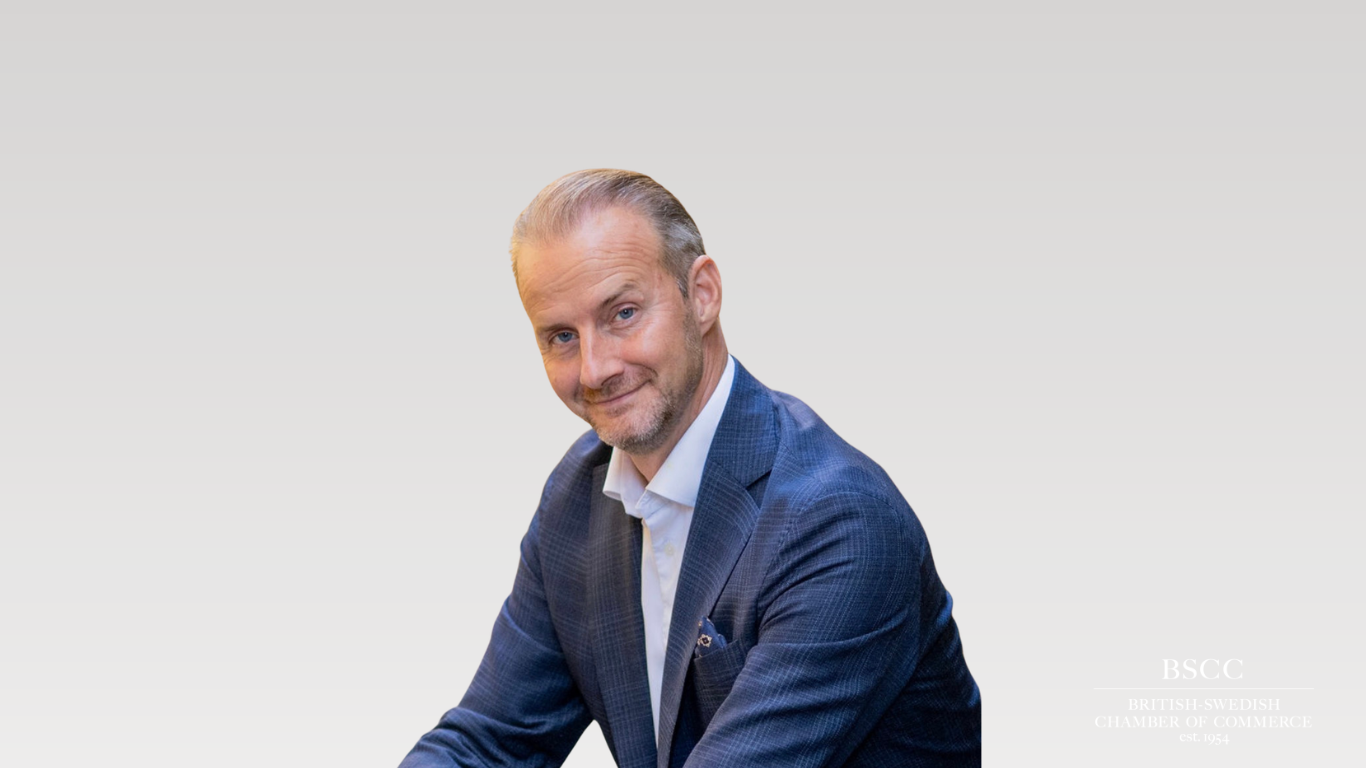
Max Landergård is the CEO at Storstad, leading the company’s creative communication and PA advisory. He helps organisations create and develop a clear messaging strategy and branding, visualising information and bringing it to life with the help of evidence-based knowledge of how people best absorb messages and integrate them into their daily lives.
Storstad is a strategic communications and media agency that delivers a full range of advisory and production services, helping organisations navigate complex communication challenges and strengthen their public presence. From strategy and message development to film, podcasts, digital content and live events, the team works closely with clients to create clear, engaging and results-driven communications.
Based in Stockholm, Storstad takes a structured, client-centred approach, combining strategic insight with creative execution to help clients achieve their business and communication objectives.
What trends do you see within your line of business?
We are seeing a shift in what clients need from a communications partner. Producing content is becoming faster and cheaper, particularly with AI. The harder task is deciding what is worth saying, who needs to hear it and what should happen as a result.
Many organisations already have a remarkable amount of material: reports, customer stories, events, films and presentations. Yet valuable ideas often reach the people who already know the organisation and disappear soon afterwards. The opportunity is to connect individual pieces of communication to a larger story about the business, then use that story consistently over time.
I also see more leaders asking what their communication actually achieves. That is a healthy question. A piece of content with a modest audience can be extremely valuable if the right customers, investors or potential employees are among them.
From your perspective, what are the greatest challenges right now?
One challenge is the gap between an organisation’s goals and the way it communicates. A leadership team may know where it wants the business to go, while the people responsible for communication are brought in only when it is time to announce a decision or produce something for a channel. That makes it harder to explain why the organisation is changing and what the change means to customers and employees.
Another challenge is measuring the wrong things. Views and clicks are easy to count. Trust, understanding and a stronger position in a buying decision take longer to develop. I have seen organisations celebrate a room with 40 people while questioning the value of a podcast with 300 listeners, without first asking who those people are.
AI adds pressure of its own. When everyone can produce more content, volume stops being an advantage. The risk is that organisations fill every channel while becoming less distinct and less useful to the people they hope to reach.
And, opportunities?
The greatest opportunity is to make communication more closely connected to how a business creates value.
Start with a concrete example: a project, a customer decision or a change inside the organisation. Then ask what that example reveals about the company as a whole. Why did it make that choice? What does it know or do particularly well? What difference did it make? A good story can make an otherwise abstract strategy understandable and give several audiences a reason to care.
There is also a substantial opportunity to get more from work that has already been done. An event should not end when the audience leaves the room. A report can lead to conversations long after publication. A customer story can help sales, recruitment and leadership explain the same business from different angles.
AI will make parts of this work more efficient. Human judgement, access to the organisation and the ability to ask a question nobody else has asked will make it valuable.