
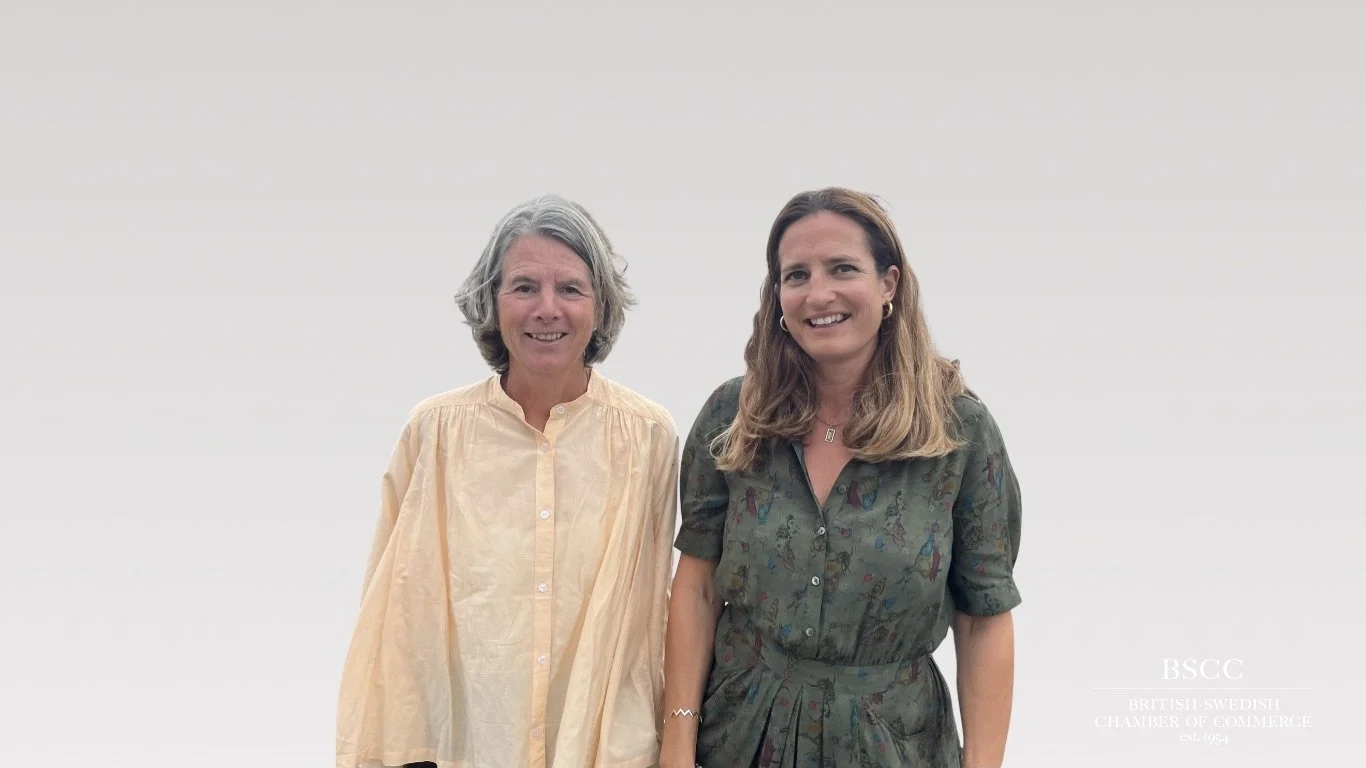
Jolande Svensson-Klijn and Ylva Hökerberg Jahnke are the founders of Global Goes Local. They have a long experience of partnering with companies to get formalities with the Swedish authorities in place and making this a smoother process, helping global employees become established locally in Sweden.
Global Goes Local assists global companies as a single point of contact to set up a business and establish a local presence in Sweden. It supports companies with legal administration, registration with authorities and coordination of work permit applications. Throughout the application process, they represents the employer and the employee to ensure a smooth, uncomplicated process of establishing themselves in Sweden.
What trends do you see within your line of business?
The Government has introduced stricter requirements for work permits in recent years, including higher salary requirements and stricter maintenance requirements. At the same time, the Government has improved the process for highly qualified employees. Applications for highly qualified employees have a 30-day reply time from the day of submission of the application and in 2026 more than 80 per cent of these applications received a reply within 30 days. Around 50 % of the employees being granted a work permit are highly qualified and work as IT specialists, technicians and engineers.
From your perspective, what are the greatest challenges right now?
One challenge for employers hiring non-EU citizens is the salary requirement. The minimum salary level for a work permit has been increased further to a gross salary of SEK 34,470 per month, which corresponds to 90% of the median salary in Sweden. When reviewing work permit applications, the Migration Agency also looks at statistics for salaries and that salaries are at market level for the occupancy and experience.
Another challenge is the maintenance requirement when the employee wants to include family members in the work permit application. In that case, the employee must be able to financially support him or herself and the family members who are applying, and the family must also have a home of sufficient size and standard to live in.
And, opportunities?
A new opportunity is that the EU Blue Card can, since June 2026, be granted for a period of up to 4 years (instead of 2 years for a normal work permit). When having an EU Blue Card and changing employment or occupation, it is in most cases sufficient to notify the Migration Agency and a new permit does not necessarily have to be applied for.
An EU Blue Card is a work permit for highly qualified employees and has a higher minimum salary requirement than a work permit (since 15th July 2026 a gross salary of SEK 53,625 is required). Except for the salary requirement, the employee must also have at least a completed bachelor’s degree (180 higher education credits) or at least 5 years of professional experience.
An employee having a work permit can change to an EU Blue Card when applying for an extension and whilst being in Sweden.
Another new opportunity is that a permanent residence permit can be applied for during the period a work permit or EU Blue Card is still valid and there is no need to wait for the expiry of the current permit before a permanent residence permit can be applied for.