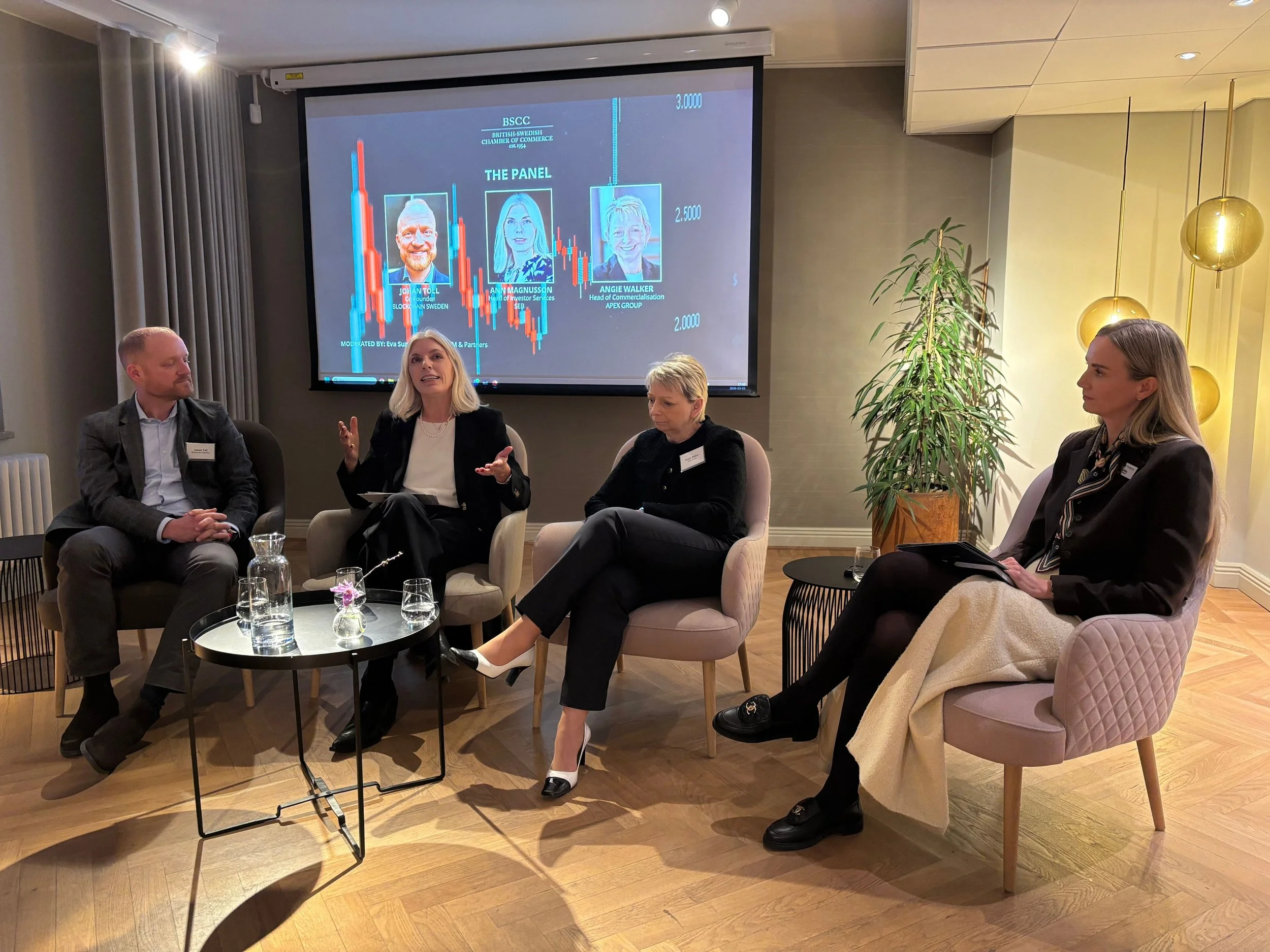
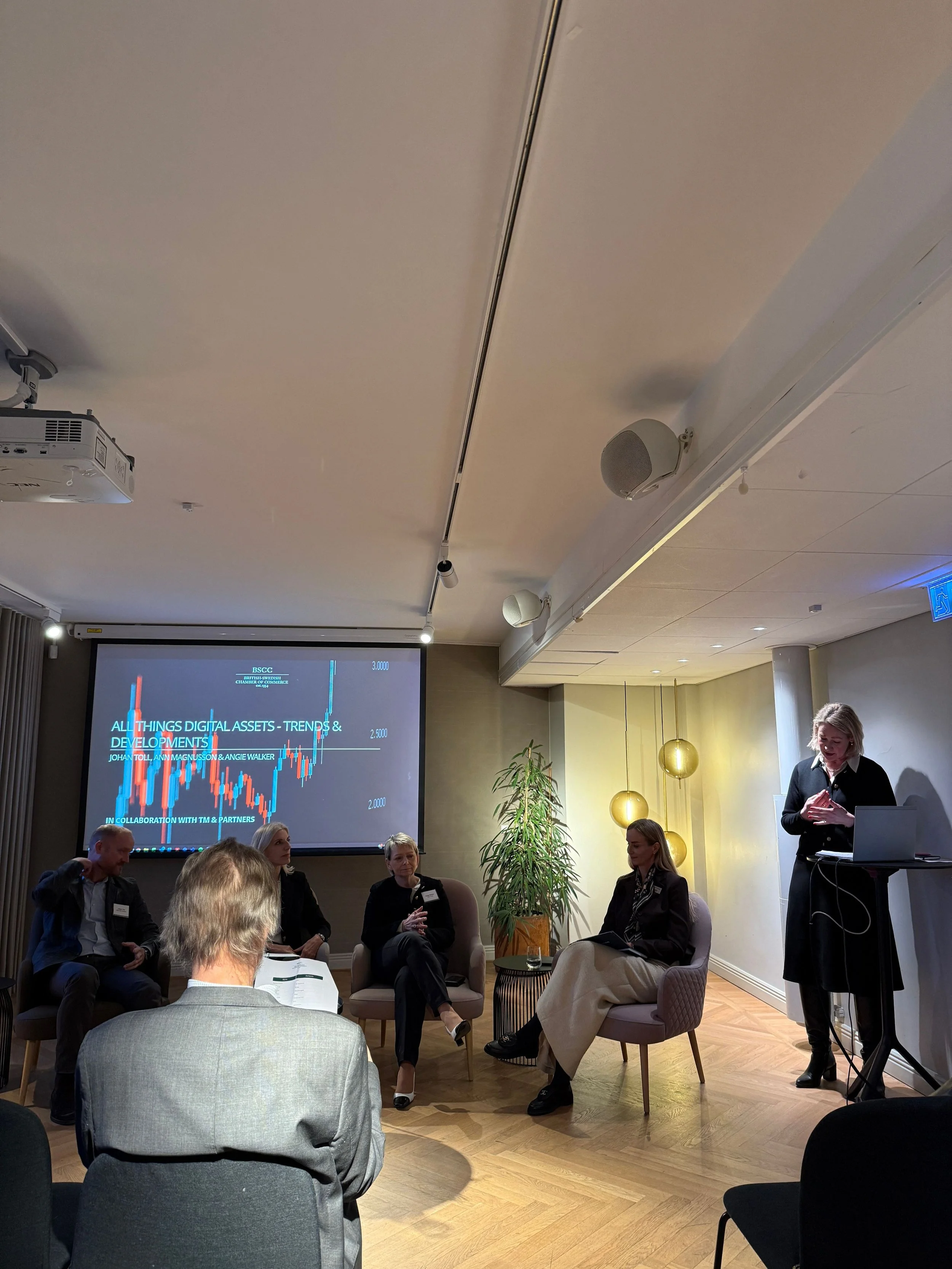
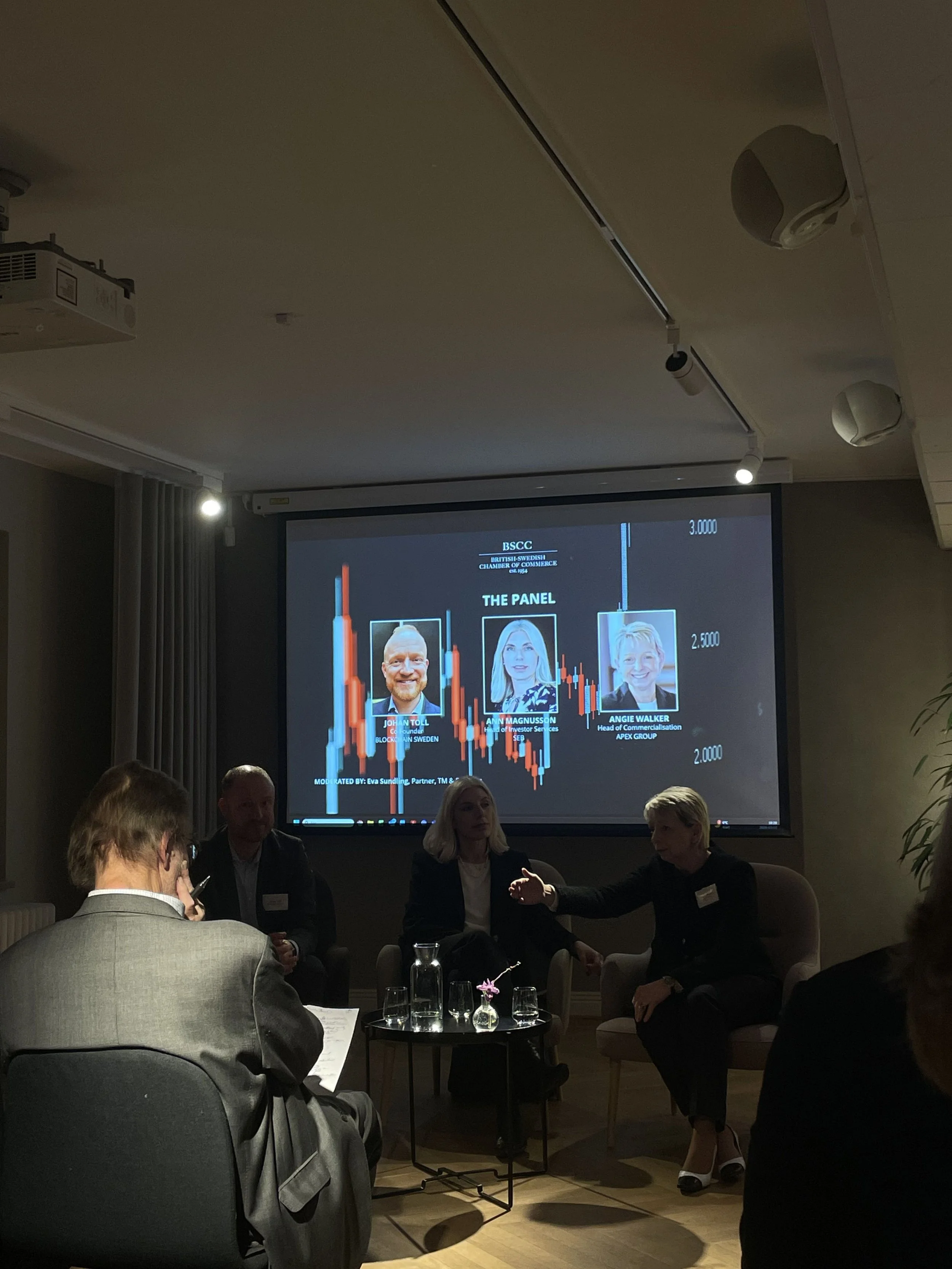
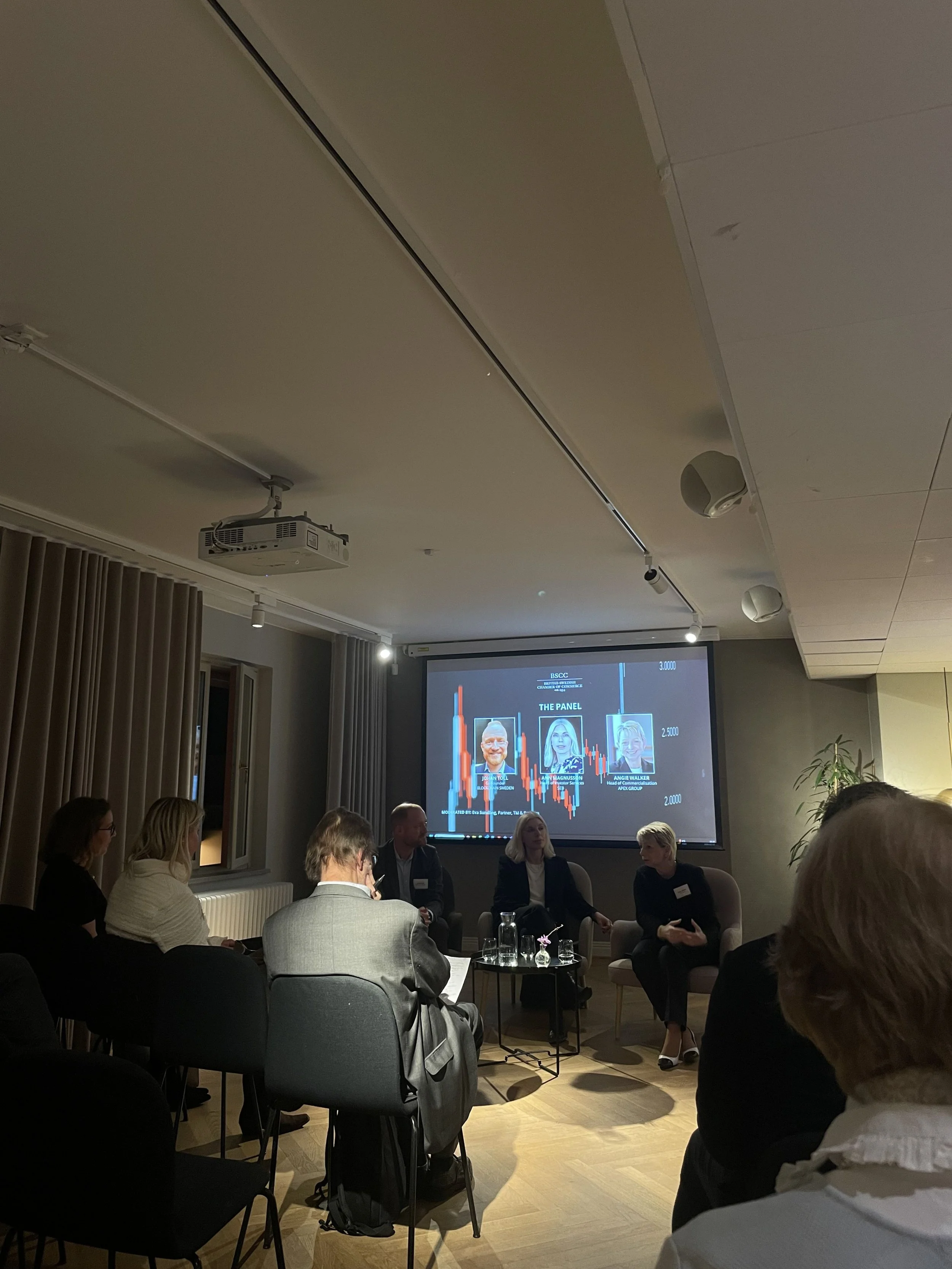
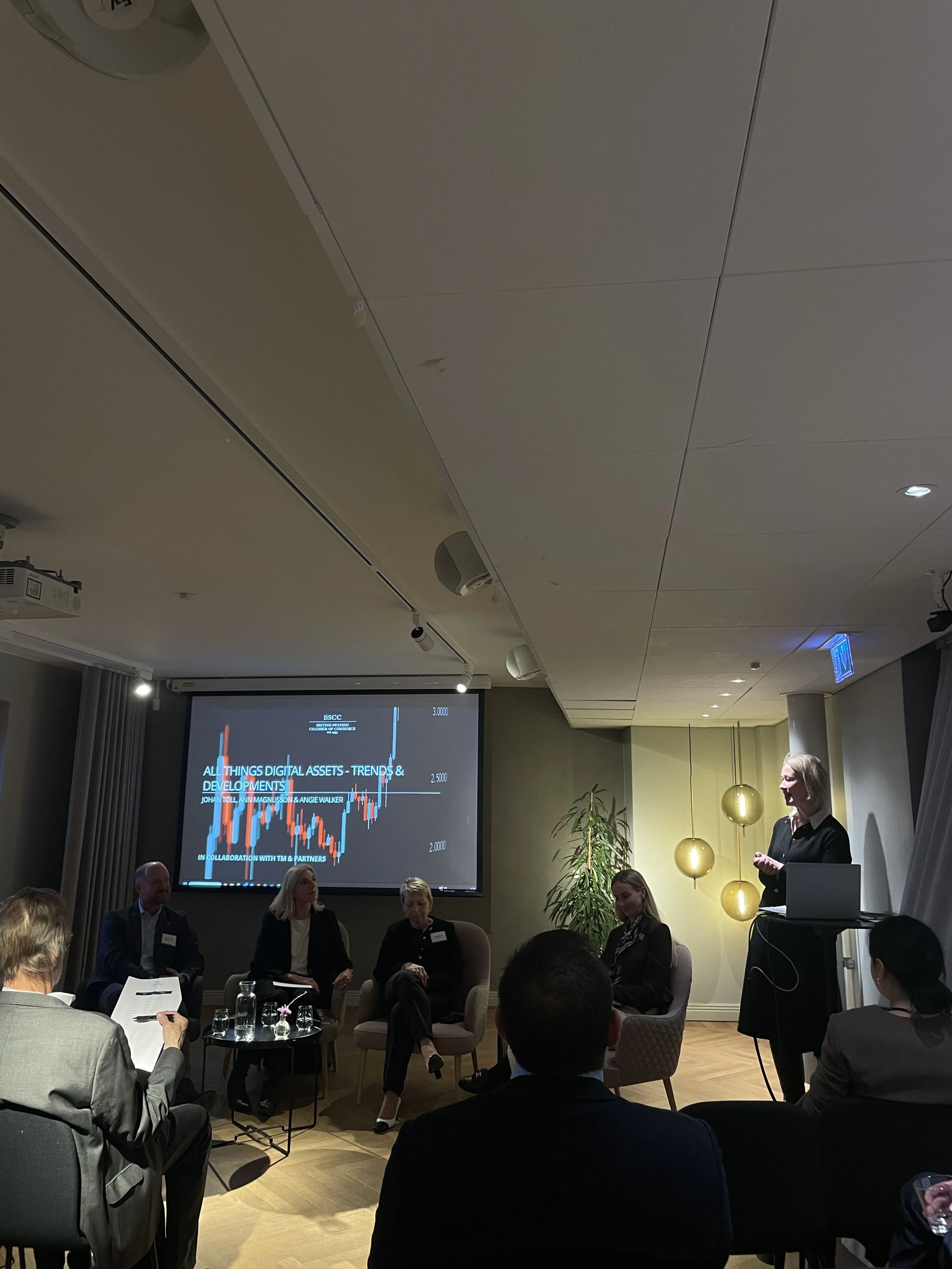
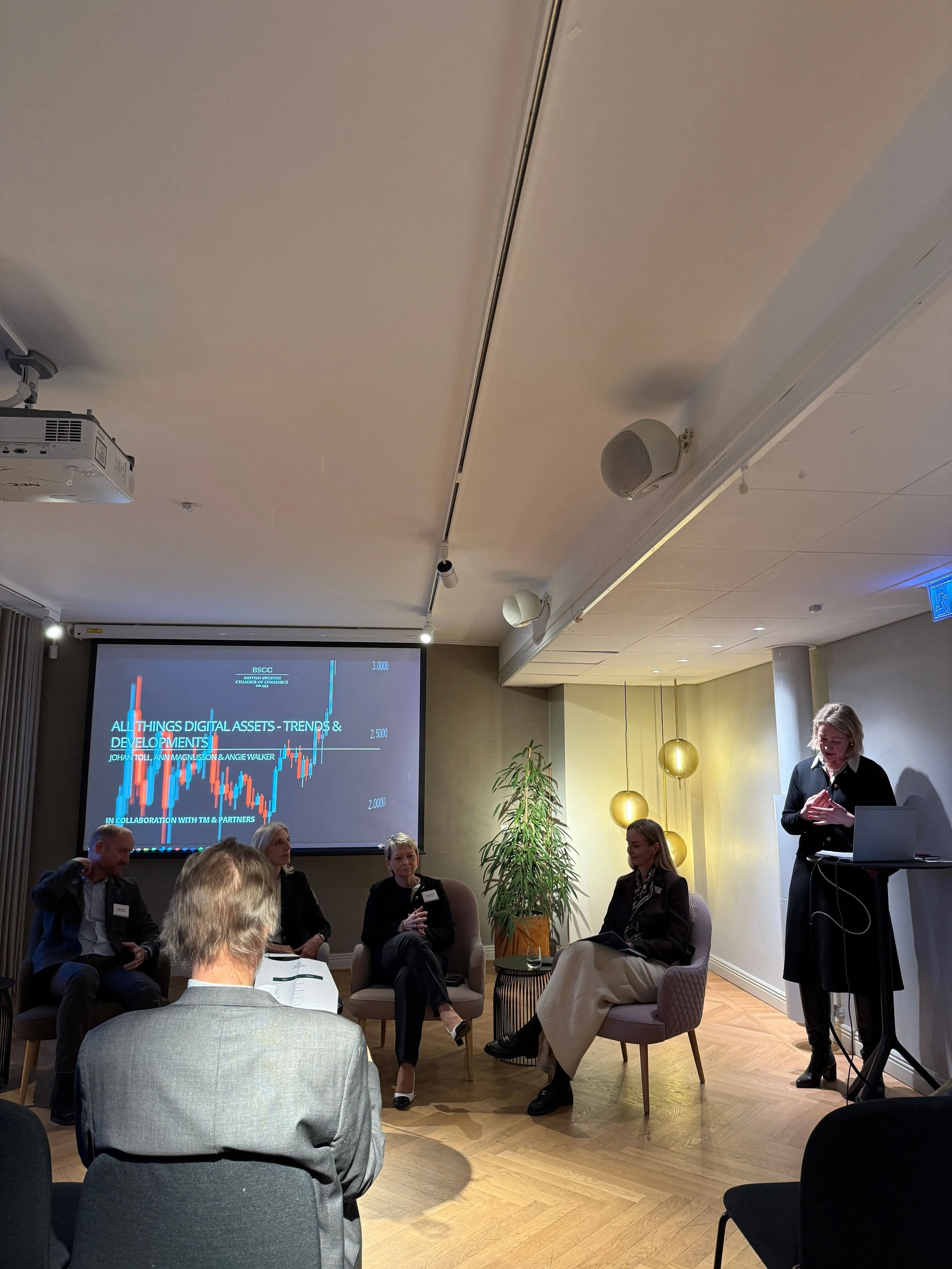
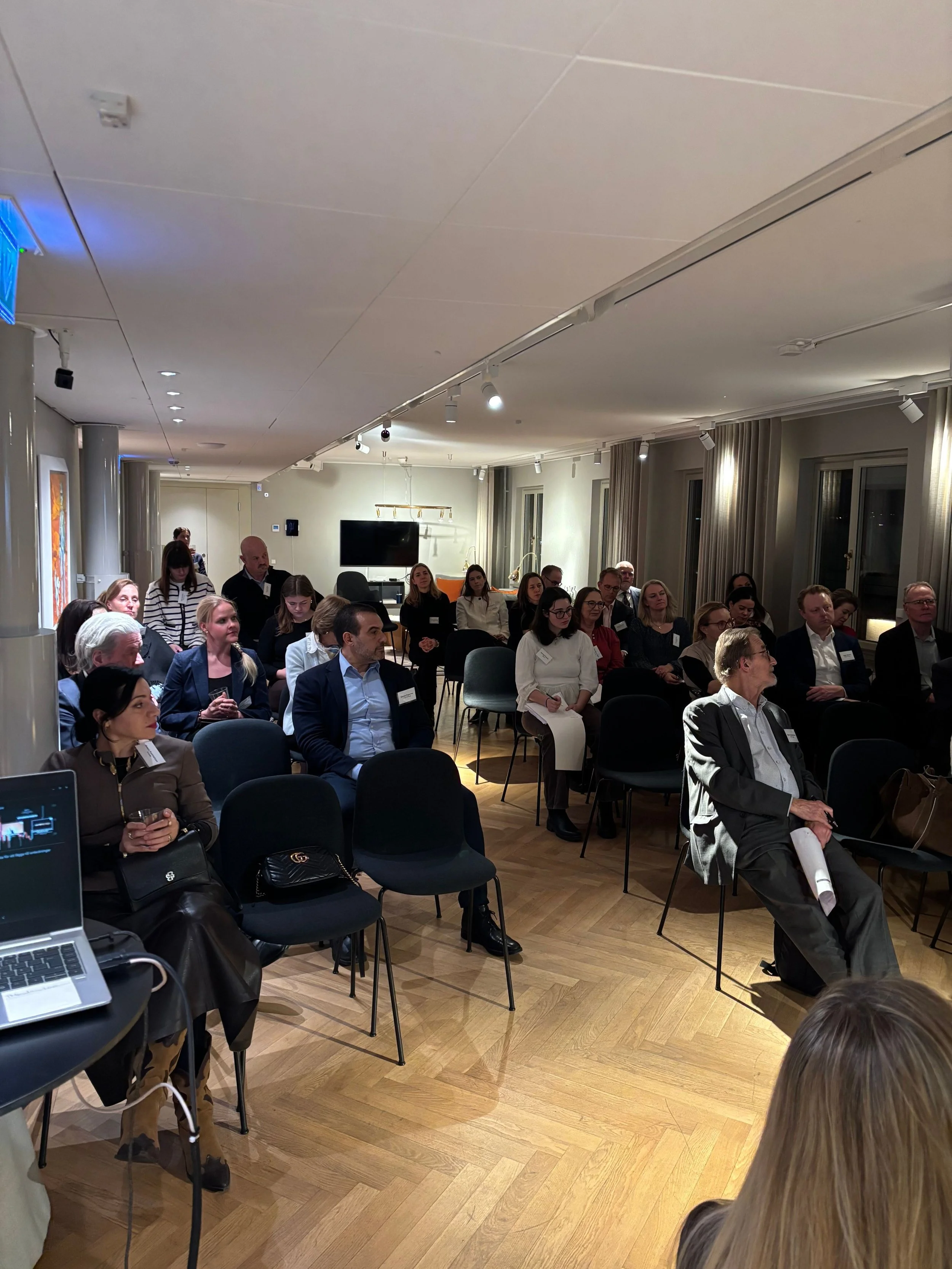
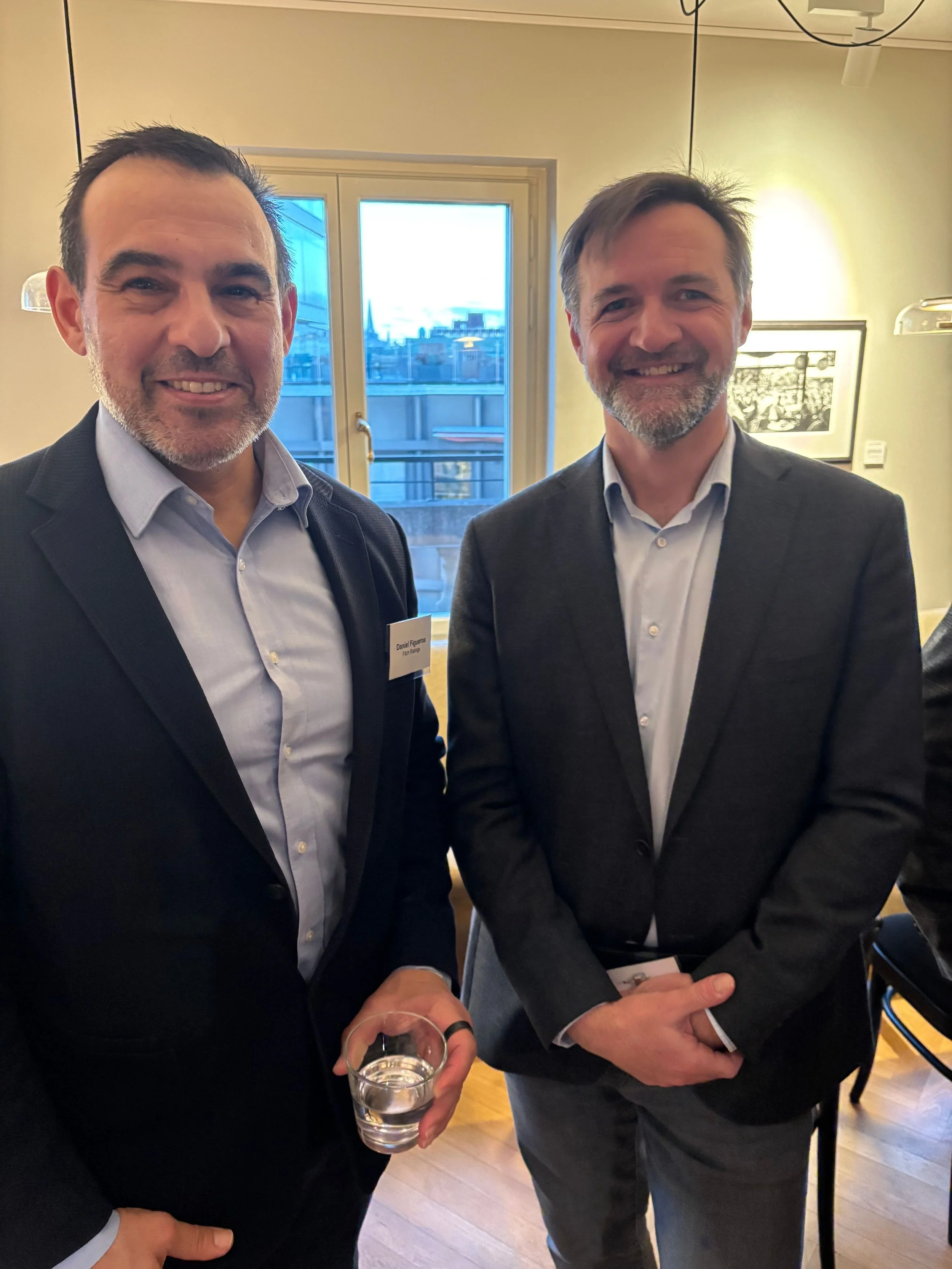
On March 3, we hosted a session exploring the evolving role of digital assets in a rapidly shifting global landscape. Together with Johan Toll (Blockchain Sweden) Ann Magnusson (SEB) and Angie Walker (Apex Group), and moderated by Eva Sundling (TM & Partners), the discussion examined how blockchain technology, stablecoins, and central bank digital currencies are reshaping financial infrastructure and influencing global trade and geopolitical dynamics.
The conversation began with the fundamentals of blockchain, described as a digital ledger that records transactions in linked blocks. As one speaker noted, “Bitcoin is a car, and blockchain is the high-speed road,” highlighting the distinction between cryptocurrencies and the broader infrastructure behind them. Blockchain was discussed as a protocol and technology that can be deployed in many ways, with Bitcoin representing one example among many implementations with its own unique characteristics. Beyond crypto markets, blockchain was presented as a tool for payments, contracts, verification, and delivery-versus-payment systems, with the potential to increase efficiency and trust in the system but at the same time reduce reliance on centralized intermediaries through smart contracts and automation. While often associated with cryptocurrencies, the speakers emphasized that blockchain technology has a potential across a wide range of industries beyond the financial sector. By enabling automated transactions and reducing the need for centralized intermediaries, blockchain may increase efficiency and trust in other digital systems.
Stablecoins were highlighted as an increasingly significant development, designed to maintain a stable value and facilitate digital transactions with lower volatility. European banking initiatives were discussed as examples of institutional collaboration aimed at building credible and transparent digital payment infrastructure. At the same time, participants noted differing international approaches. While some countries, such as the UAE, are at the forefront of adopting and regulating digital assets, others — including Saudi Arabia — maintain restrictive positions. The discussion emphasized that until greater alignment is reached between major economies, widespread global adoption of stablecoins will remain challenging.
The UK was also addressed in this context. Compared to parts of Europe, it was described as having moved more cautiously into the regulatory space, though the Bank of England has recently intensified discussions around digital assets and regulatory frameworks. Speakers expressed hope that the coming years will bring further regulatory clarity and expansion for the UK, enabling stronger participation in the evolving digital asset ecosystem.
The session further explored the growing interest of governments and central banks in retail and wholesale central bank digital currencies (CBDCs), reflecting broader efforts to adapt to digitalization while maintaining oversight and financial stability. As digital payments expand and financial infrastructure becomes increasingly strategic, questions remain around regulation, security, and how digital assets will coexist with traditional finance.
Overall, the discussion underscored that digital assets are no longer a niche innovation, but an emerging component of global trade, financial systems, and geopolitical strategy.
We want to thank everyone of our members who came to listen and contribute to this event, and a special thank you to TM & Partners for hosting us!