
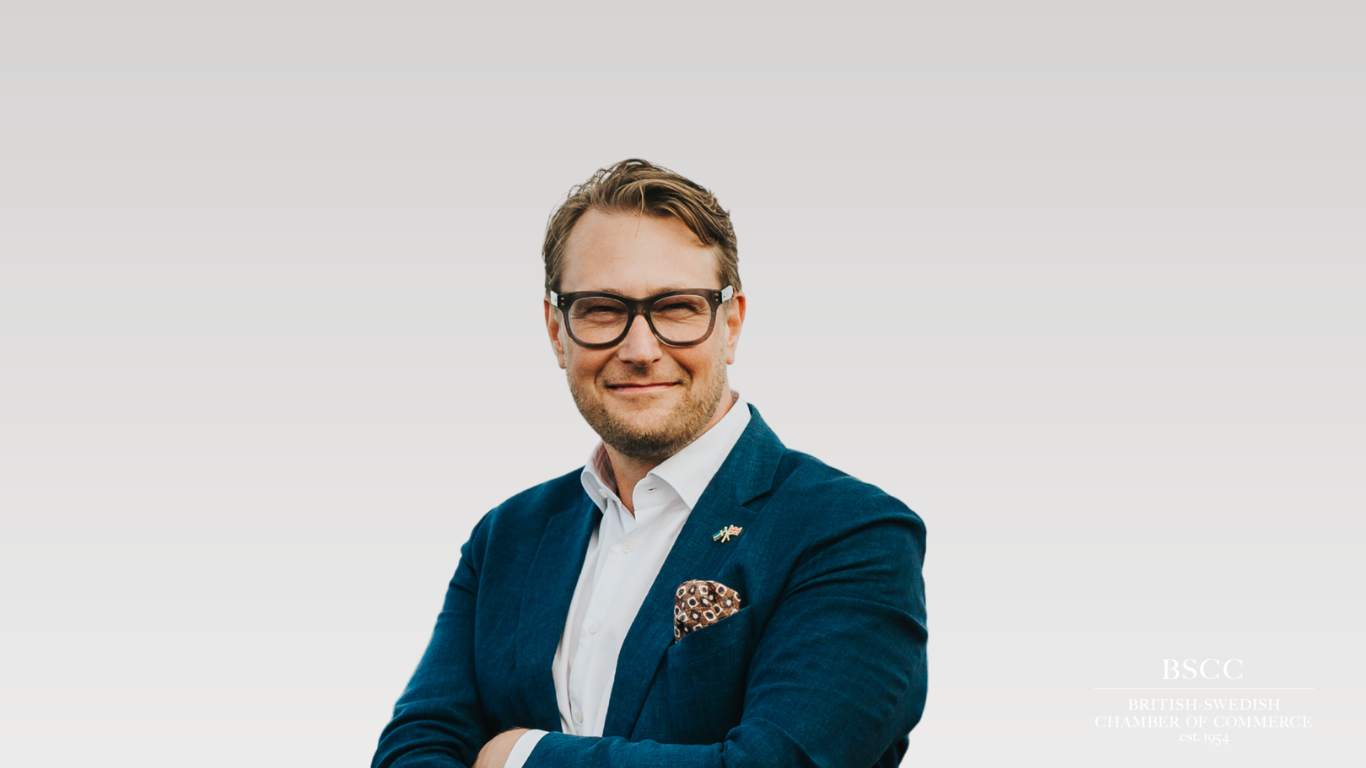
Robert Bergqvist is Country Executive Sweden for Rolls-Royce SMR, leading the commercialisation and deployment of small modular reactors in Sweden. He works at the intersection of energy policy, industrial strategy, and large capital projects, with a focus on building trusted partnerships across government, utilities, and the supply chain.
Rolls-Royce SMR is developing a factory-built nuclear power plant designed for repeatable delivery at scale. The programme aims to strengthen energy security and competitiveness by enabling predictable, fossil-free electricity that supports industrial growth, electrification, and the rapidly rising power needs of the digital economy.
What trends do you see within your line of business?
Energy has moved from being a “cost line” to being a board-level strategic risk. The defining trend is that electrical power supply is now treated as critical infrastructure, alongside defence and digital networks. That shifts the conversation towards resilience, domestic capability, and the ability to scale with confidence.
A second trend is the collision between electrification and the data economy. AI, data centres, and broader digitalisation are pushing demand for firm, predictable, fossil-free power. This is nudging many countries back towards a more balanced system view: renewables where they are strong, grids and storage where they add value, and nuclear as the backbone that keeps industry running through dark, cold, windless weeks.
Finally, there is a clear move towards “Europeanising” the supply chain. After several shocks in a row, businesses want shorter, more transparent supply chains, not as a slogan but as measurable risk reduction. That favours long-term partnerships, standardisation, repeatable programmes, and industrial capacity that can be audited and relied upon.
From your perspective, what are the greatest challenges right now?
The hardest challenge is delivery credibility in an environment of heightened uncertainty. Global unrest, volatile commodity markets, and shifting politics mean stakeholders are more cautious, and they have every reason to be. In nuclear, that caution shows up as tougher questions on schedule realism, supply chain readiness, licensing maturity, and total project cost, including financing and risk buffers.
A related challenge is that Europe wants strategic autonomy at the same time as it wants speed. Building a robust European supply chain is absolutely the right direction, but it requires disciplined sequencing: qualify suppliers, build capacity, lock standards, and avoid bespoke solutions. If everyone invents their own approach, we recreate fragmentation and inflate cost.
The third challenge is trust, and it sits at multiple levels. Trust between countries, between public and private sectors, between utilities and technology providers, and between prime contractors and suppliers. In uncertain times, trust is not built by optimistic narratives. It is built by evidence: transparent governance, hard milestones, and a willingness to confront bad news early.
And, opportunities?
The opportunity is to turn today’s uncertainty into long-term competitiveness. If Sweden and Europe secure abundant fossil-free electricity, we do not just decarbonise, we attract industrial investment, strengthen energy security, and reduce exposure to geopolitical shocks. Firm power becomes an economic advantage: it enables jobs, exports, and stability.
There is also a major opportunity in designing partnerships that match reality. Not every partner relationship needs to look the same. Some will be deep strategic alliances with shared risk and long horizons, others will be capability partnerships focused on manufacturing or services, and some will be policy and financing coalitions that create investable frameworks. The common denominator is choosing counterparts you can genuinely trust, then behaving in a way that earns that trust repeatedly.
And this is where the need for speed becomes decisive. In the next decade, Europe will not only compete on cost and carbon, but on time. The regions that can permit, finance, manufacture, build, and connect new capacity faster will win the investment in data centres, electrified industry, and clean supply chains. Speed is not about cutting corners, it is about industrial discipline: standard designs, repeatable delivery, early supply chain qualification, and procurement based on multi-unit programmes rather than one-off projects. If Europe gets that right, we build a capability that is hard to copy: resilience backed by abundant electricity, delivered at pace.